



Chevy Silverado Brake Service: Signs It’s Time For New Brake Pads or Rotors
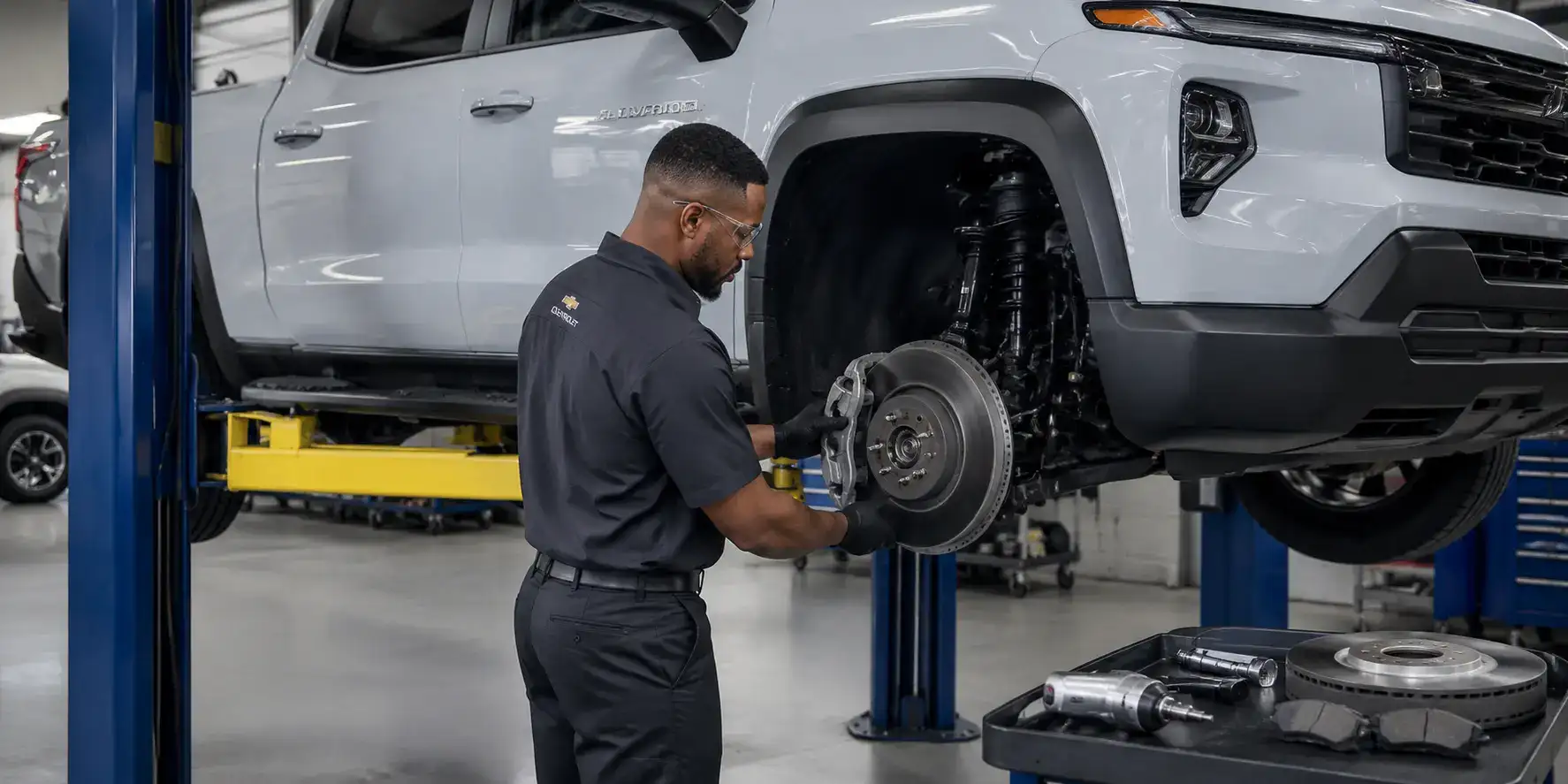 Quick Answer: Chevy Silverado brake service may be needed if your truck squeals, grinds, vibrates while braking, takes longer to stop, or shows a low brake pad life warning. Chevrolet gives general brake pad life ranges of about 20,000 to 25,000 miles in very severe use and about 40,000 to 60,000 miles in average driving, but Silverado brake pads can wear sooner when the truck carries weight, tows, or spends a lot of time in San Diego traffic. Kearny Mesa Chevrolet can inspect pads, rotors, brake fluid, and related components so you know what your truck needs before small warning signs turn into larger repairs.
What Are the First Signs Your Silverado Brakes Need Service?
The first signs usually show up as sound, feel, stopping distance, or a dashboard message. If your Silverado starts chirping, squealing, grinding, pulsing, pulling while braking, or taking longer to stop, it is time to have the brake system checked.
Brake pads include wear indicators that make a chirping noise when the friction material gets low, generally around 2 mm remaining, which is the point at which pads should be replaced.
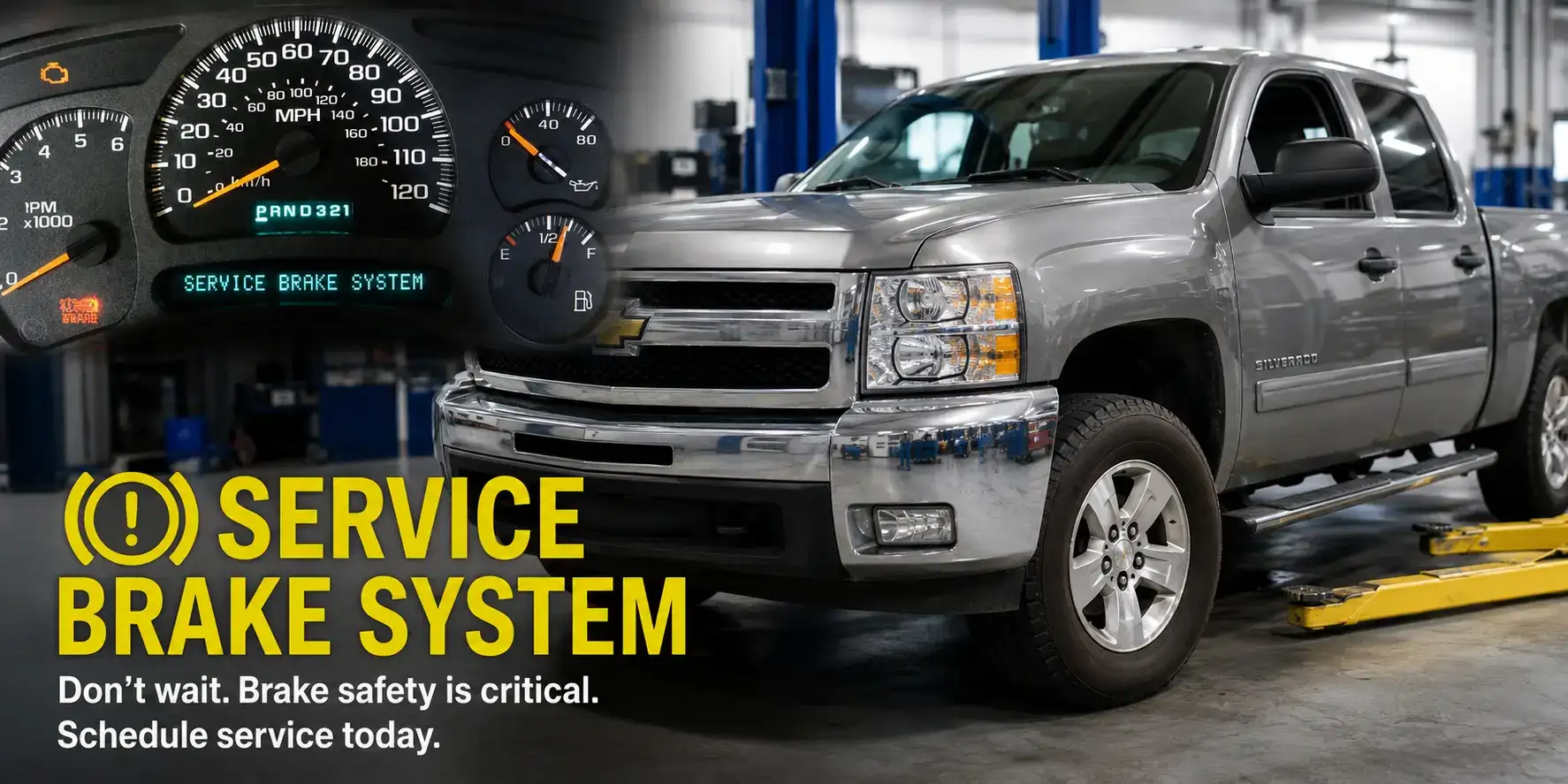
Many newer Silverados also show a brake pad life percentage in the dashboard display. The Brake Pad Life Monitor estimates remaining pad life and can give you an earlier heads up than sound alone.
Grinding is more urgent than a squeal. It can mean the pad material is gone and metal is contacting the rotor, which can damage the rotor surface and reduce confidence during sudden stops.
Why Do Silverado Brake Pads Wear Down?
Silverado brake pads wear down because they create the friction needed to slow the truck. Every stop removes a small amount of pad material, and the pace of wear changes with traffic, load, terrain, driving style, and pad material.
Brake wear does not have a single mileage number for every truck, but Chevrolet offers general ranges. Brake systems are designed to deliver about 20,000 to 25,000 miles of pad life in very severe use, such as heavy stop-and-go traffic, and roughly 40,000 to 60,000 miles in average driving.
Front pads usually wear first because the front brakes handle around 70 percent of the stopping force, and frequent towing or hauling can shorten front pad life to closer to 25,000 to 35,000 miles.
San Diego driving can add its own pattern, especially with freeway slowdowns, hills, job-site stops, and neighborhood errands.
You may want brake service sooner if:
- Your truck spends much of the week in stop-and-go traffic because repeated braking can wear pads faster than steady cruising.
- Your Silverado carries work gear, materials, or passengers, often because added weight puts more strain on the brake system.
- You tow boats, campers, or equipment because the truck needs more braking control when weight is added.
- Your dashboard shows a low brake pad life message because newer Silverado models may alert you before the pads are noisy.
- The brake pedal starts feeling different because pedal feel can reveal changes before the brakes look obviously worn from the outside of the wheel.
How Can You Tell if Silverado Brake Rotors Need Attention?
Silverado brake rotors may need attention if you feel pulsing through the brake pedal, shaking through the steering wheel, a grinding noise, or rough braking. The rotor is the metal disc that the brake pad clamps against to slow the truck, so while pads are the friction material designed to wear, rotors are built to last longer but can still develop grooves, heat spots, thickness changes, or surface damage.
A technician needs to measure and inspect the rotor to determine whether it can continue to operate safely, be resurfaced, or should be replaced. Replacing pads early enough often keeps rotors in better shape, while ignoring worn pads for too long can score the rotor surface and turn a simple job into a larger repair.
A smooth stop while unloaded can feel different when the bed is full or the truck is heading downhill. If the truck shakes only while braking, the rotors may be part of the conversation. If it vibrates at certain speeds without braking, the cause could be tires, wheel balance, suspension, or another issue.
The same weekly workload that wears brakes also affects the tires, which is why a brake check and a tire check often go together. You can read more in our guide to Silverado tire rotation and alignment. Rather than relying on mileage alone, the service team can assess pad thickness, rotor condition, brake fluid, calipers, hoses, and related hardware together.
Why Schedule Chevy Silverado Brake Service At Kearny Mesa Chevrolet?
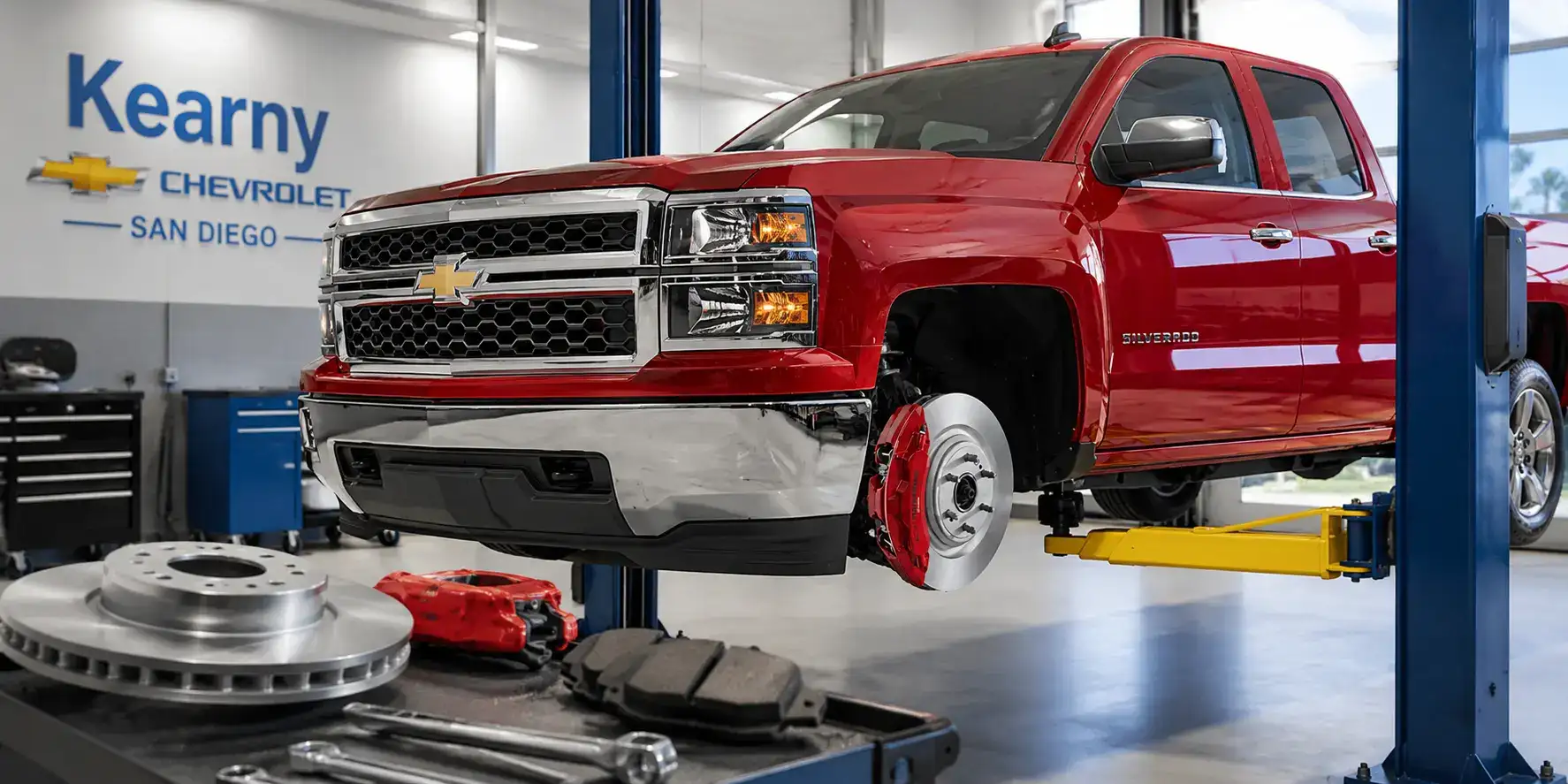
Kearny Mesa Chevrolet gives Silverado owners a local place to inspect brake noise, pedal feel, brake pad wear, rotor condition, and related service concerns. The team works with Chevrolet trucks and can help match brake recommendations to your Silverado model, use, mileage, and symptoms.
If your truck is due for Chevy Silverado brake service, you can review Chevrolet Silverado service, learn more about brake service, check current service specials, ask about OEM parts, or schedule service online before you visit.
Our dealership is located on Balboa Ave, making it convenient for Silverado drivers around Kearny Mesa, Clairemont, Serra Mesa, Mission Valley, and nearby San Diego communities. If your truck squeals, grinds, or shakes while braking, shows a low brake pad life message, or simply feels different than it used to, schedule a brake inspection and let the service team take a closer look.
FAQs About Chevy Silverado Brake Service
How often do Chevy Silverado brake pads need to be replaced?
Chevrolet designs brake systems for roughly 40,000 to 60,000 miles of pad life in average driving and about 20,000 to 25,000 miles in severe stop-and-go use. Frequent towing or hauling can bring front pad life down closer to 25,000 to 35,000 miles, so use, not just mileage, drives the timing.
What is the brake pad life monitor on my Silverado?
Many newer Silverados display an estimated brake pad life percentage in the dashboard, which helps you plan a replacement before you hear noise. The monitor is reset when new pads are installed, and it works best alongside a hands-on inspection of pad thickness and rotor condition.
What happens if I keep driving with grinding brakes?
Driving with grinding brakes can damage the rotor surface and make the repair more involved. Grinding should be checked promptly because it may indicate that the pad material is gone or that another brake system problem is present.
Can a multipoint inspection check my Silverado brakes?
Yes, a multipoint inspection can include a brake check along with tires, fluids, battery, wipers, and other key items. It is a practical time to ask about pad thickness, rotor condition, brake fluid, and any brake noise you have noticed.
Should I replace all four brakes at the same time on my Silverado?
Not always, because front and rear brakes wear at different rates, and the front pads usually wear first since they handle most of the stopping force. A technician can measure each axle and recommend replacing the front, rear, or all four axles based on the condition of the pads and rotors.
Can Kearny Mesa Chevrolet replace Silverado brake pads and rotors?
Yes, Kearny Mesa Chevrolet offers brake services for Chevrolet Silverado models, including brake pad replacement and, when appropriate, brake rotor resurfacing. The service team can inspect your truck and explain whether pads, rotors, fluid, or other brake components need attention.
0 comment(s) so far on Chevy Silverado Brake Service: Signs It’s Time For New Brake Pads or Rotors