



When Can You Expect These Trucks to Need Transmission Repair?
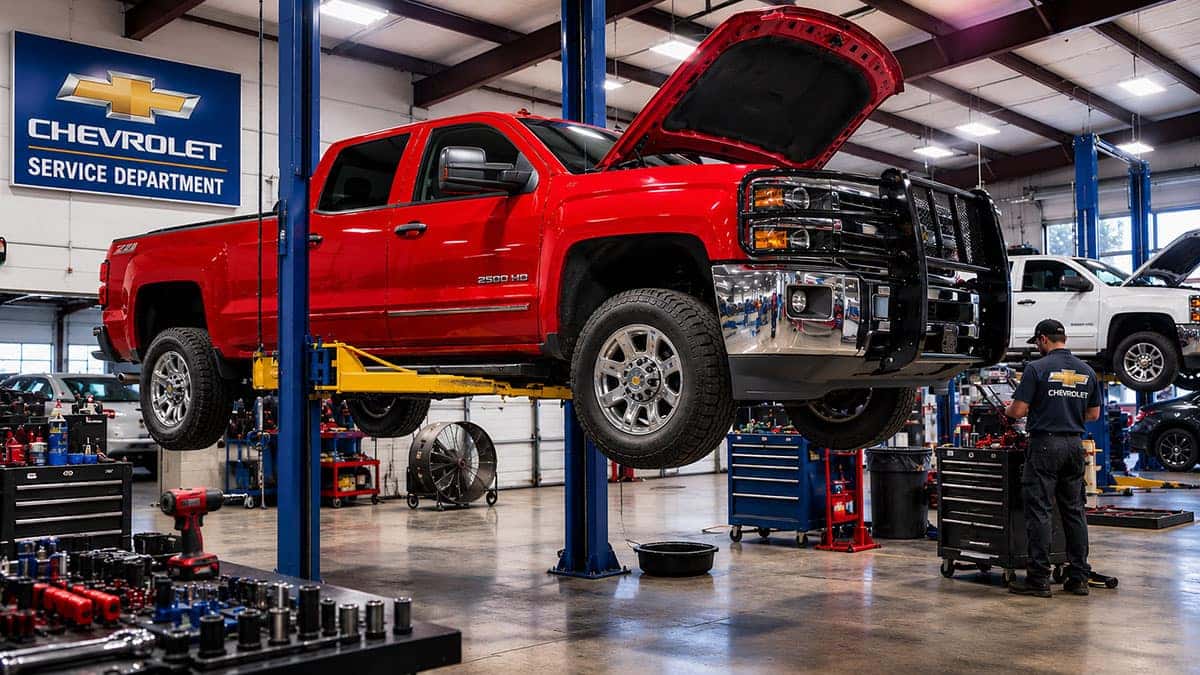 Most gas-powered truck transmissions can last well into high mileage when they are serviced correctly, but they do not all age the same way. A lightly used commuter truck may go much longer before major transmission work than a truck that tows every weekend, carries work equipment daily, or spends years in heavy traffic.
Quick Answer
Truck transmission repair may be needed when shifting becomes rough, delayed, noisy, inconsistent, or when the truck starts slipping under load. The exact timing depends on the truck, how it is maintained, how often it tows or hauls, and how much heat, traffic, and stop-and-go driving it sees.
At Kearny Mesa Chevrolet, our service center can inspect transmission symptoms on Chevy trucks and many other gas-powered truck makes. If the repair no longer makes sense for your mileage, budget, or long-term plans, our team can also help you compare trade-in options toward a new Chevy truck.
Why Bring a Truck Transmission Issue to Kearny Mesa Chevrolet?
Kearny Mesa Chevrolet gives truck owners a clear place to start when shifting starts to feel different. Our Chevrolet service center is especially well-suited for Chevy Silverado, Colorado, and Silverado HD owners because GM-certified technicians understand Chevrolet truck systems, service procedures, diagnostic tools, and genuine GM parts.
That matters with transmission concerns because guessing can get expensive. A rough shift may point to fluid condition, software, sensors, leaks, overheating, valve body issues, internal wear, or something else entirely. A proper diagnosis helps separate a maintenance issue from a repair issue.
The service team can also inspect many concerns on other gas-powered truck makes and models. If you drive a Ford F-150, Ram 1500, Toyota Tacoma, Toyota Tundra, Nissan Frontier, or Nissan Titan and are not sure whether the symptom is serious, Kearny Mesa Chevrolet can help you start with an inspection and a clearer next step.
For drivers from Kearny Mesa, Clairemont, Serra Mesa, Mission Valley, and the greater San Diego area, that means you can schedule truck transmission service, review repair options, and decide whether the truck is worth repairing before the problem gets worse.
What Are the Signs of Truck Transmission Problems?
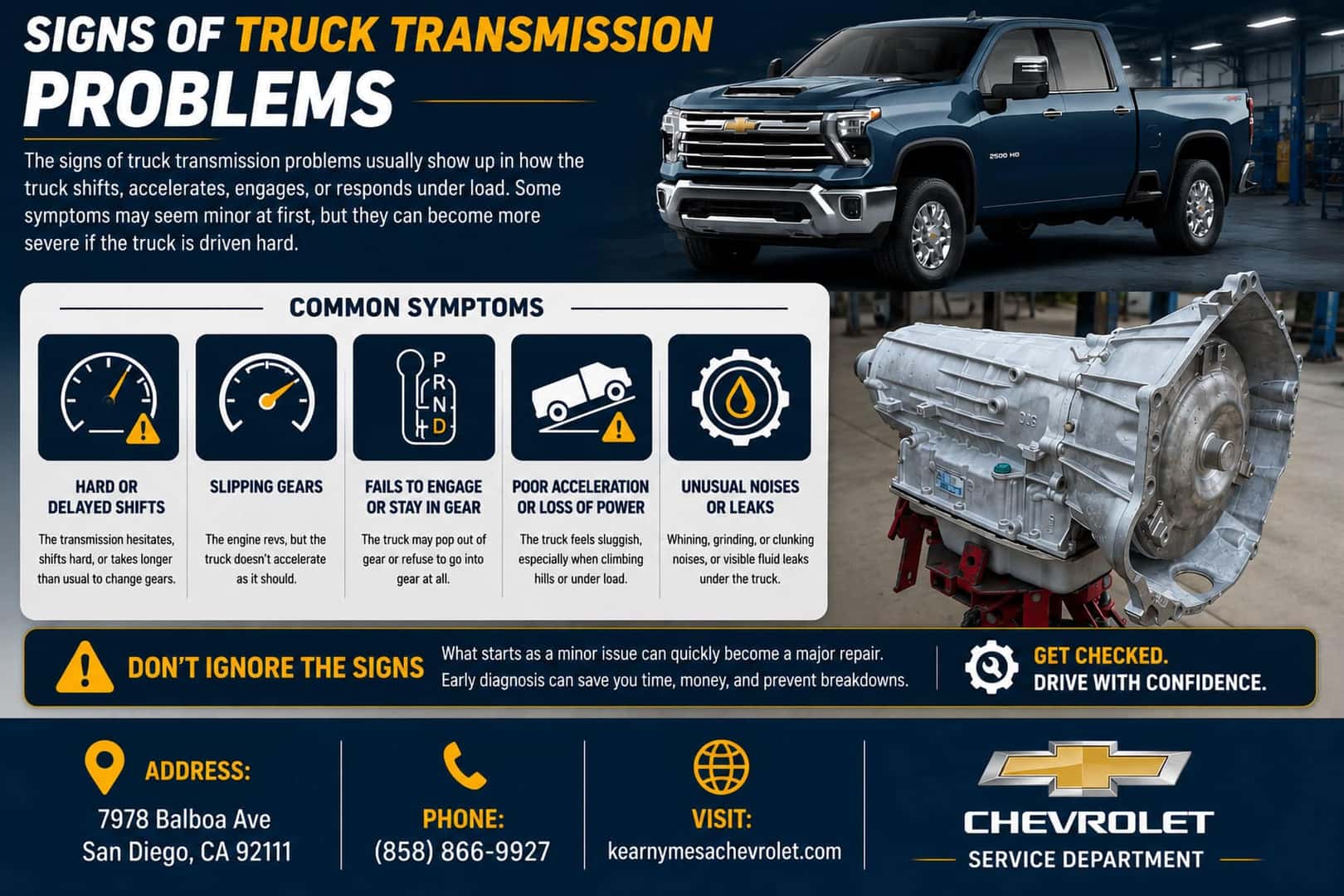
The signs of truck transmission problems usually show up in how the truck shifts, accelerates, engages, or responds under load. Some symptoms may seem minor at first, but they can become more severe if the truck is driven hard.
Common signs include:
- Delayed shifting, where the truck takes longer than normal to move between gears
- Hard shifting, where gear changes feel rough, sudden, or jerky
- Transmission slipping, where the engine rpm rises, but the truck does not accelerate normally
- Clunking or banging, especially when shifting into drive, reverse, or lower gears
- Burning smell, which may point to overheated or degraded transmission fluid
- Fluid leaks, especially reddish or brownish fluid under the truck
- Shuddering, vibration, or hesitation during acceleration
- Warning lights, including check engine lights or transmission-related messages
These symptoms can appear sooner when the transmission is under greater stress. The most common stressors include:
- Towing, because extra weight creates more heat and load inside the transmission
- Stop-and-go driving, because constant shifting creates more wear than steady highway driving
- Heavy payload, because tools, materials, equipment, passengers, and trailers add strain
- Heat, because hot weather and heavy use can break down transmission fluid faster
- Delayed maintenance, because old or contaminated fluid can reduce protection
- Aggressive driving, because hard acceleration and abrupt shifting create extra stress
 If you notice the symptoms above, schedule an inspection before assuming the truck needs a full transmission replacement. Some issues are service-related, while others need a deeper diagnosis.
What Is the Difference Between Transmission Service and Transmission Repair?
Transmission service is maintenance-focused, while transmission repair means a problem has already been found or needs diagnosis. Service may include checking fluid condition, replacing fluid, replacing a filter when applicable, inspecting for leaks, and scanning the vehicle for codes.
Transmission repair may involve fixing leaks, replacing sensors, addressing valve body concerns, repairing internal components, reprogramming control modules, or replacing larger parts, depending on the diagnosis.
For truck owners, the difference is simple. Service helps protect the transmission before symptoms become serious. Repair addresses a problem that is already affecting how the truck drives.
That is why a truck with no symptoms may only need scheduled transmission service, while a truck that is slipping, shuddering, or shifting harshly should be inspected quickly. Kearny Mesa Chevrolet’s Certified Chevy maintenance and repairs team can help separate routine service needs from repair concerns.
How Long Do Gas-Powered Truck Transmissions Usually Last?
A gas-powered truck transmission can often last well into six-figure mileage when it is maintained correctly, but no brand has a guaranteed lifespan. Many traditional automatic transmissions are commonly discussed in the 150,000 to 200,000-mile range with proper maintenance, but towing, heat, payload, fluid condition, and driving habits can shorten or extend that timeline.
Chevy, Ford, Ram, Toyota, and Nissan all build gas-powered trucks that can serve owners for years. The more honest comparison is not “which brand never has transmission issues,” because every truck can develop problems. The better question is whether the truck has been serviced correctly, used within its ratings, and inspected early when symptoms appear.
For Chevy owners, the advantage is support. Silverado, Colorado, and Silverado HD owners can bring their trucks to a Chevrolet service center with GM-trained technicians, GM diagnostic support, and access to genuine GM parts. That can make the service path clearer when a transmission symptom appears.
What Should Chevy, Ford, Ram, Toyota, and Nissan Truck Owners Watch For?
Chevy, Ford, Ram, Toyota, and Nissan truck owners should watch for the same major warning signs: slipping, hard shifts, delayed engagement, shuddering, leaks, burning smells, and warning lights. The brand matters, but maintenance history and use pattern usually matter more.
Chevy Trucks
Chevy Silverado, Colorado, and Silverado HD trucks are built for real truck use, including towing, hauling, commuting, and work. Transmission life still depends on service history, towing habits, payload, heat, and fluid condition.
The strongest reason to service a Chevy truck at Kearny Mesa Chevrolet is familiarity with GM systems. GM-certified technicians, factory diagnostic processes, and genuine GM parts can help Chevy truck owners get a more accurate answer when the symptoms above appear.
Ford Trucks
Ford F-150 and other gas-powered Ford trucks are common in the full-size truck segment. Like any truck transmission, Ford transmissions can be affected by towing, heavy payload, heat, stop-and-go driving, and delayed service.
Ford owners should not ignore the symptoms listed above. If shifting changes occur, a diagnostic inspection can help determine whether the issue is fluid-related, electronic, mechanical, or related to another system.
Ram Trucks
Ram 1500 and gas-powered Ram trucks are often used for towing, family driving, commuting, and work. Transmission service timing can vary by model year, transmission type, and use.
Ram owners should pay close attention to slipping, delayed engagement, shuddering, and leaks, especially if the truck tows or carries weight often. Early inspection can help prevent a small issue from becoming a larger repair.
Toyota Trucks
Toyota Tacoma and Toyota Tundra trucks have a strong reputation for durability, but they still need proper transmission maintenance. Towing, heat, traffic, and old fluid can affect Toyota trucks the same way they affect other gas-powered pickups.
Toyota owners should follow the model-specific maintenance guide and schedule an inspection if the symptoms above appear. A reputation for reliability does not replace fluid care, diagnostics, or early attention.
Nissan Trucks
Nissan Frontier and Nissan Titan trucks can also perform well with proper care, but they are not immune to transmission wear. Service history, towing, heat, and fluid condition still matter.
Nissan owners should schedule an inspection if shifting becomes rough, delayed, noisy, or inconsistent. The earlier the issue is checked, the more options the owner may have.
Should You Repair a Truck Transmission or Trade It In?
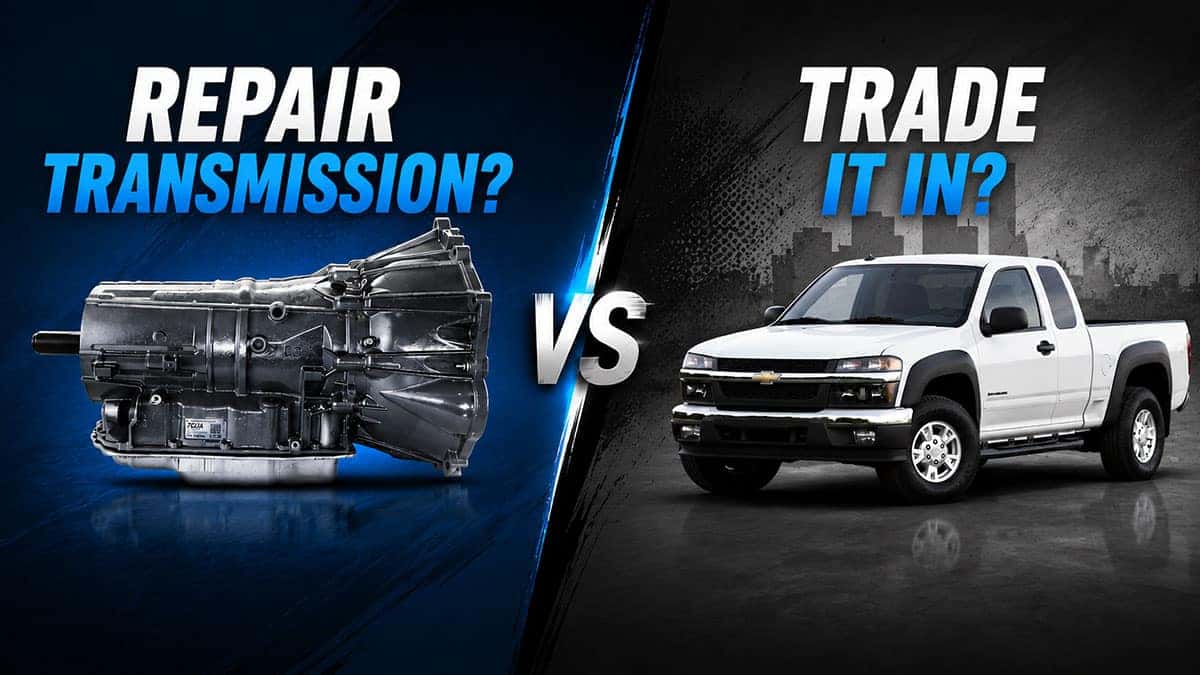
You should compare truck transmission repair with a trade-in when the truck has high mileage, recurring transmission symptoms, a major repair estimate, or other aging components that may also need attention soon. Sometimes repair makes sense. Other times, the transmission issue is the point where upgrading becomes the smarter move.
Repair may make sense if:
- The truck is otherwise in good condition
- The repair cost is reasonable compared with the truck’s value
- You plan to keep the truck for several more years
- The issue is caught early and does not require major internal work
A trade-in may make more sense if:
- The truck has high mileage and multiple repair needs
- Transmission repair costs are close to the truck’s current value
- You need better towing, payload, or reliability for work
- You want newer trailer technology, safety features, or warranty coverage
- You are ready to move into a new Chevy Colorado, Silverado 1500, Silverado HD, or Silverado EV
At Kearny Mesa Chevrolet, you can start with a service inspection and also explore trade-in value if the repair no longer fits your plans. You can also browse new Chevy truck inventory or compare used Chevrolet trucks for sale in San Diego.
FAQs About Truck Transmission Repair
How often should transmission fluid be changed in a truck that tows?
A truck that tows may need transmission fluid service sooner than a lightly driven commuter truck. The right interval depends on the model year, powertrain, transmission type, towing frequency, and owner’s manual, so ask the service center to confirm the schedule for your exact truck.
How much does truck transmission repair usually cost?
The cost of truck transmission repair depends on the diagnosis. A minor leak, sensor issue, or service need may cost much less than an internal rebuild or replacement, so it is best to schedule an inspection before assuming the truck needs a full transmission replacement.
Does Kearny Mesa Chevrolet service Ford, Ram, Toyota, or Nissan truck transmissions?
Kearny Mesa Chevrolet can help inspect many truck transmission issues, including those on non-Chevy makes and models. Exact repair capability depends on the vehicle, diagnosis, equipment, and parts availability.
Does the Chevy warranty cover the transmission?
New Chevrolet powertrain coverage typically includes the transmission for 5 years or 60,000 miles, whichever comes first, but coverage varies by model year, warranty terms, ownership status, and exclusions. Have the service team check your VIN, mileage, and warranty status.
Does towing within the recommended capacity damage a truck transmission?
Towing within the recommended capacity should not automatically damage a truck transmission, but it does add heat and load. Trucks that tow often should follow the correct service schedule for their use.
What happens if I keep driving with a slipping transmission?
Driving with a slipping transmission can generate more heat, wear internal components, and turn a minor issue into a major repair. If the truck slips, hesitates, shudders, or revs without accelerating normally, schedule an inspection soon.
0 comment(s) so far on When Can You Expect These Trucks to Need Transmission Repair?